
Brand Idea
A creator and documentary media network
A recognizable label connecting documentaries, shows, podcasts and newsletters.
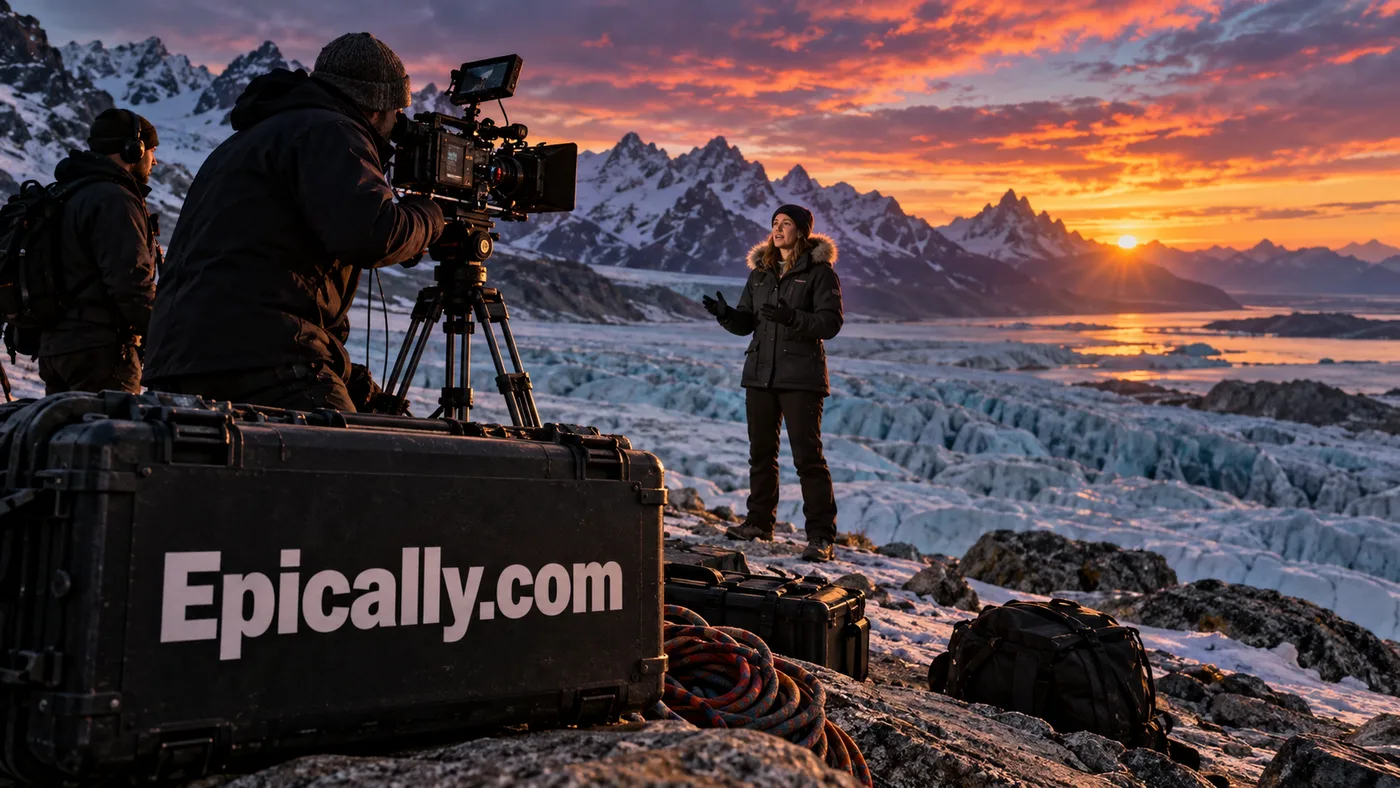
Epically could serve as a parent label for a creator-led media network focused on substantial stories. Its role would be to connect the work, not replace the individual voices that make people return. This illustrative concept explores a documentary and long-form storytelling business; it does not describe an existing channel, catalog or audience. The practical challenge is to make a broad media identity feel coherent while allowing each series to have its own subject and character.
Define the editorial promise
A network needs a reason for its projects to belong together. For this concept, imagine stories about people undertaking difficult creative or physical work: making a film, preparing an expedition or bringing an event to life. The connective idea is patient attention to how something happens. That gives an editor a basis for choosing projects and gives an audience a useful expectation. A broad promise to tell great stories would offer less guidance about what should be commissioned.
The initial audience might include viewers who enjoy documentary storytelling and want more context than a short clip can provide. Their attention has to be earned by the subject, structure and quality of the work. The brand can help them recognize a related release later, but it cannot manufacture interest in an unclear premise. Each show page should explain who or what the story follows and why that particular journey is worth watching or hearing.
Separate the label from the shows
The parent identity could appear as an Epically presentation or production credit. Individual series would have their own titles, descriptions and visual treatments. A newsletter might use a straightforward descriptor that signals its connection to the network. The goal is a hierarchy someone can understand after seeing one episode: this is the show, these people made it, and this is where related work can be found. Repeating the same name across every level can make that harder.
A possible website structure would organize work by series first, with format filters for film, audio and written features where they are useful. A documentary that has an accompanying interview should link those pieces explicitly. A visitor should not need to guess whether similarly named items are separate projects or different versions of the same story. Clear episode numbering, release dates and contributor credits help the catalog remain usable as it grows.
Give every release a dependable home
An episode page could bring together the main work, an accessible summary, contributor information and relevant supporting material. Transcripts or captions can make a story easier to follow in different contexts. When external sources inform a factual claim, the page can link to them near the relevant explanation. A compact credits area can acknowledge roles without overwhelming the viewing experience. The exact structure should follow the format and the needs of the audience.
The domain becomes especially useful when a story appears on several distribution platforms. The website can hold the durable episode description and the current ways to access it, while the platforms supply their own playback and discovery features. That does not make the website a substitute for distribution. It gives the team a place to maintain context, correct mistakes and connect related work without relying entirely on one platform's page layout or recommendation system.
Develop a sustainable release rhythm
A small media team should choose a publishing rhythm that matches its actual production capacity. A documentary may require long periods of research and editing. A supporting newsletter can keep interested viewers informed without pretending that every update is a major release. The useful question is what the audience will receive consistently. A clear description of the format and subject is more credible than a schedule the team has not yet learned to sustain.
A pilot can test the relationship between the story and its supporting material. Does the short trailer communicate the premise? Does the show description answer the questions viewers bring to the page? Does a transcript need additional context to stand on its own? Feedback on those points can improve the next release. It is more actionable than treating general enthusiasm for the brand name as proof that the editorial concept will find an audience.
Keep commercial relationships understandable
The network might eventually explore sponsorship, memberships, licensing or commissioned production, depending on the work and its audience. Each would call for a distinct explanation. A sponsored episode should make the relationship visible. A membership page should specify what is included. A licensing inquiry should identify the work in question and the intended use. The brand can support several business models, but the audience should be able to tell which relationship applies in each context.
Editorial decisions also need clear responsibility. Someone should own corrections, contributor permissions, image rights and the presentation of sensitive subjects. Those tasks are part of making dependable media, even when the public identity is energetic and cinematic. A contact route for corrections can be separate from a commercial inquiry. Keeping those purposes clear helps the team respond appropriately and makes it easier for contributors and viewers to reach the right person.
Introduce the work where it belongs
Distribution could begin with the people and communities interested in a specific subject. A film about an expedition has different natural entry points from a series about independent game development. Short extracts should represent the full work accurately and give the viewer a clear path to it. Collaborations should fit the editorial premise rather than merely exchanging logos. The parent label can become recognizable through repeated, relevant work over time.
Before choosing Epically.com, test it beside sample show titles, a podcast introduction and a film credit. The name should feel comfortable around quieter, more reflective material as well as dramatic scenes. A buyer can use an acquisition inquiry to describe the planned channel mix and the role of the parent label. The concept offers a naming and publishing structure to consider; the audience, catalog and operating relationships would have to be built by the future business.
Could this be the name?
Discuss the intended use and acquisition of Epically.com.
Inquire about Epically.com